


AMD Reportedly Poised to Unveil Ryzen AI Halo Mini PCs This June
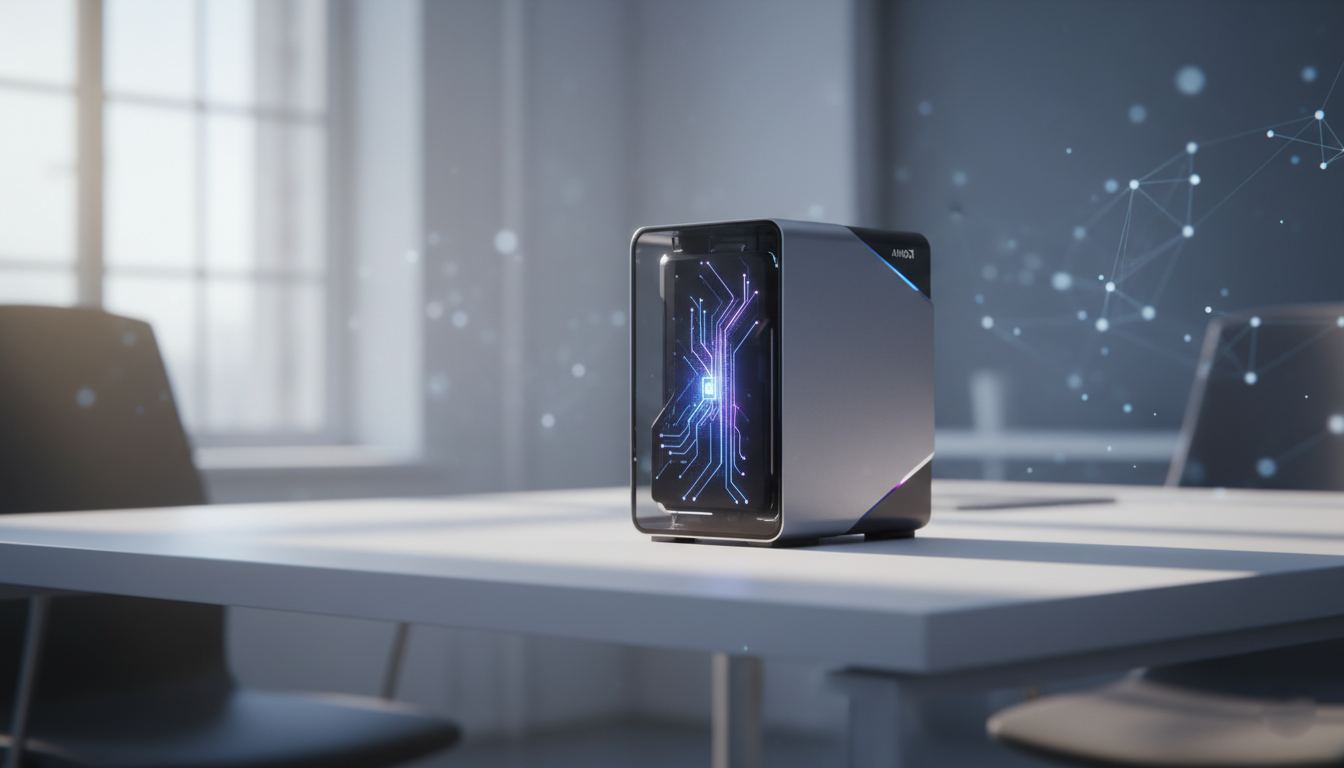
The tech world is abuzz with reports indicating that AMD is gearing up to launch its highly anticipated Ryzen AI Halo mini PCs as early as June. This development marks a significant move for AMD, positioning them firmly in the burgeoning market for compact, AI-accelerated computing devices. While specific details remain under wraps, "Ryzen AI Halo" is widely understood to refer to systems powered by AMD's next-generation "Strix Point" APUs, which are expected to feature a formidable blend of CPU, GPU, and a dedicated Neural Processing Unit (NPU).

These mini PCs promise to deliver a compelling combination of performance and efficiency within a small form factor. The Strix Point APUs are anticipated to leverage AMD's cutting-edge Zen 5 CPU architecture, offering substantial improvements in processing power over previous generations. Coupled with an enhanced RDNA 3.5 (or potentially RDNA 4-lite) integrated graphics engine, these systems will be capable of handling a wide range of tasks, from everyday productivity and multimedia consumption to more demanding creative workloads and even light gaming.
The compact design makes them ideal for space-constrained environments, whether it's a home office, a living room entertainment hub, or even for specialized industrial applications at the edge. The "AI Halo" designation underscores the pivotal role of artificial intelligence in these new machines. The integrated NPU in the Strix Point APUs is expected to offer significantly boosted AI processing capabilities, far exceeding the performance of previous AMD mobile processors.

Ultrazn - Powerful Cloud Hosting for Your Digital Success
Ultrazn offers a complete digital solution with reliable domain registration, high-performance cloud hosting, secure business email, and scalable infrastructure. Designed for speed...

OctaSend - Professional Email Marketing Platform
OctaSend is a professional email marketing platform that helps businesses create, send, and track powerful campaigns with ease. Featuring smart automation, advanced analytics, and...

TradExcel - Professional Trading Journal
TradExcel is a professional trading journal built to help traders log, analyze, and revisit every trade. By tracking performance, strategies, and discipline, TradExcel empowers tra...

This hardware acceleration will be crucial for running AI-powered applications more efficiently, enabling smoother experiences with features like real-time language translation, advanced image and video editing, intelligent noise cancellation, and other generative AI tasks that are becoming increasingly common across various software platforms. This aligns perfectly with the industry's push towards "AI PCs" capable of running sophisticated AI models locally. AMD's strategic timing for a June launch suggests a potential unveiling around major industry events, such as Computex, which often serves as a platform for significant hardware announcements.
This launch would place AMD in direct competition with Intel's upcoming Lunar Lake and Arrow Lake processors, which are also heavily focused on AI acceleration. The battle for supremacy in the AI PC segment is heating up, and AMD's entry with a dedicated mini PC line could offer a distinct advantage by providing ready-to-use, optimized solutions. The availability of Ryzen AI Halo mini PCs could democratize access to powerful AI computing, making it more accessible to a broader range of consumers and businesses.
These systems could be particularly attractive to users who require robust performance for AI-driven tasks but prefer the discreteness and energy efficiency of a mini PC over a traditional desktop tower or a high-end laptop. Furthermore, the emphasis on local AI processing enhances data privacy and reduces reliance on cloud-based services for certain AI workloads. Ultimately, AMD's reported launch of Ryzen AI Halo mini PCs in June represents a forward-looking step that could redefine expectations for compact computing.
By integrating powerful Zen 5 CPUs, advanced RDNA graphics, and a cutting-edge NPU into a small form factor, AMD is poised to offer a compelling solution for the next era of AI-powered personal computing. The anticipation is high to see how these systems perform and what new possibilities they unlock for users seeking efficient and intelligent computing experiences.
OctaSend - Professional Email Marketing Platform
OctaSend is a professional email marketing platform that helps businesses create, send, and track powerful campaigns with ease. Featuring smart automation, advanced analytics, and...
TradExcel - Professional Trading Journal
TradExcel is a professional trading journal built to help traders log, analyze, and revisit every trade. By tracking performance, strategies, and discipline, TradExcel empowers tra...
Ultrazn - Powerful Cloud Hosting for Your Digital Success
Ultrazn offers a complete digital solution with reliable domain registration, high-performance cloud hosting, secure business email, and scalable infrastructure. Designed for speed...
Comments (0)
Leave a Comment
No comments yet. Be the first to comment!
Related Posts



OctaSend - Professional Email Marketing Platform
OctaSend is a professional email marketing platform that helps businesses create, send, and track powerful campaigns with ease. Featuring smart automation, advanced analytics, and...
Ultrazn - Powerful Cloud Hosting for Your Digital Success
Ultrazn offers a complete digital solution with reliable domain registration, high-performance cloud hosting, secure business email, and scalable infrastructure. Designed for speed...
TradExcel - Professional Trading Journal
TradExcel is a professional trading journal built to help traders log, analyze, and revisit every trade. By tracking performance, strategies, and discipline, TradExcel empowers tra...