


Apple Watch Touch ID Rejection: Unpacking the Two Core Reasons
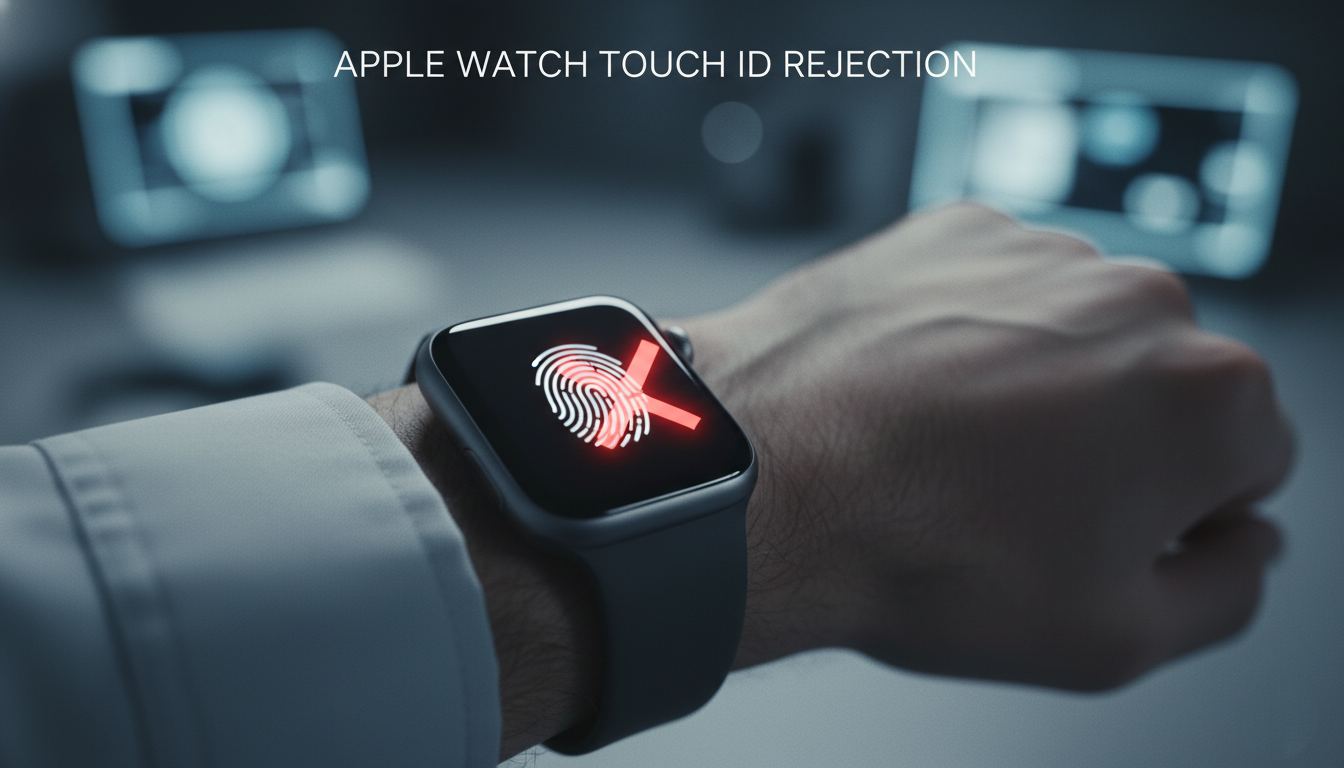
Apple has reportedly opted against integrating Touch ID, its acclaimed fingerprint authentication technology, into the Apple Watch, a decision that has sparked considerable discussion among tech enthusiasts and industry observers. While the convenience and enhanced security offered by Touch ID would seemingly be a natural fit for the wearable device, reports suggest that the company's rejection stems primarily from two significant engineering hurdles that Apple was unwilling to compromise on. The appeal of Touch ID on the Apple Watch is undeniable.
Users frequently desire faster and more secure ways to authenticate purchases, unlock the device, or access sensitive applications without needing to input a passcode or rely on an unlocked paired iPhone. A quick fingerprint scan could streamline interactions, making the Apple Watch even more autonomous and versatile. However, integrating such a sophisticated biometric sensor into the watch’s compact form factor presents a formidable challenge that touches upon the very core of its design philosophy.
One of the primary reasons for the reported rejection is the profound **design and space constraints** inherent in the Apple Watch. The device is a marvel of miniaturization, packing numerous sensors, a powerful processor, and a battery into an incredibly slim and lightweight chassis. Integrating a reliable fingerprint sensor, whether it be an optical, capacitive, or ultrasonic variant, would demand precious internal space.
Potential locations, such as under the display, within the Digital Crown, or integrated into the side button, each present their own set of engineering complexities. Placing it under the display could impact screen thickness, brightness, or even the responsiveness of the touch interface. Integrating it into the Digital Crown, an already intricate component, might compromise its smooth functionality or overall durability.

TradExcel - Professional Trading Journal
TradExcel is a professional trading journal built to help traders log, analyze, and revisit every trade. By tracking performance, strategies, and discipline, TradExcel empowers tra...

OctaSend - Professional Email Marketing Platform
OctaSend is a professional email marketing platform that helps businesses create, send, and track powerful campaigns with ease. Featuring smart automation, advanced analytics, and...

Ultrazn - Powerful Cloud Hosting for Your Digital Success
Ultrazn offers a complete digital solution with reliable domain registration, high-performance cloud hosting, secure business email, and scalable infrastructure. Designed for speed...
Any such addition risks increasing the watch's thickness, reducing battery life, or requiring the removal of other critical components, all of which would be detrimental to the user experience Apple strives to deliver. The second critical factor is maintaining the Apple Watch's industry-leading **water resistance and overall durability**. A core utility of the Apple Watch is its ability to withstand exposure to water, whether during swimming, showering, or intense workouts.
Fingerprint sensors, by their nature, are sensitive components that can be significantly affected by moisture, sweat, and debris. Ensuring that a Touch ID sensor can operate reliably and securely under such varied conditions, while also maintaining the device's high IP rating for water resistance, is an immense engineering feat. Compromising this fundamental feature for the sake of a fingerprint sensor would be a significant step backward, potentially limiting the watch's utility for a large segment of its user base who rely on its robust water-resistant capabilities.
Apple’s commitment to product longevity and reliability means avoiding features that might degrade performance or durability over time due to environmental factors. Currently, the Apple Watch relies on a combination of wrist detection, a user-set passcode, and its ability to unlock automatically when the paired iPhone is unlocked. While not as immediate as a fingerprint scan on the watch itself, these methods provide a robust security framework for most users.
Apple likely weighed the perceived benefits of on-device Touch ID against the significant engineering challenges and potential compromises to existing features and user experience, ultimately concluding that the current solutions, combined with the watch's unique use cases, were sufficient. While Touch ID may not be coming to the Apple Watch anytime soon, it doesn't preclude future innovations. Advancements in sensor technology, such as more resilient under-display fingerprint scanners or novel biometric methods, could eventually overcome these hurdles.
However, for now, Apple’s decision underscores its unwavering commitment to design integrity, functional reliability, and maintaining the core strengths that define the Apple Watch experience. It’s a testament to the idea that not every desirable feature is worth implementing if it compromises the fundamental principles of a product.
OctaSend - Professional Email Marketing Platform
OctaSend is a professional email marketing platform that helps businesses create, send, and track powerful campaigns with ease. Featuring smart automation, advanced analytics, and...
Ultrazn - Powerful Cloud Hosting for Your Digital Success
Ultrazn offers a complete digital solution with reliable domain registration, high-performance cloud hosting, secure business email, and scalable infrastructure. Designed for speed...
TradExcel - Professional Trading Journal
TradExcel is a professional trading journal built to help traders log, analyze, and revisit every trade. By tracking performance, strategies, and discipline, TradExcel empowers tra...
Comments (0)
Leave a Comment
No comments yet. Be the first to comment!
Related Posts



TradExcel - Professional Trading Journal
TradExcel is a professional trading journal built to help traders log, analyze, and revisit every trade. By tracking performance, strategies, and discipline, TradExcel empowers tra...
Ultrazn - Powerful Cloud Hosting for Your Digital Success
Ultrazn offers a complete digital solution with reliable domain registration, high-performance cloud hosting, secure business email, and scalable infrastructure. Designed for speed...
OctaSend - Professional Email Marketing Platform
OctaSend is a professional email marketing platform that helps businesses create, send, and track powerful campaigns with ease. Featuring smart automation, advanced analytics, and...