


Chinese Humanoid Robots' Marathon Win Validates Musk's China Competitive Edge Thesis
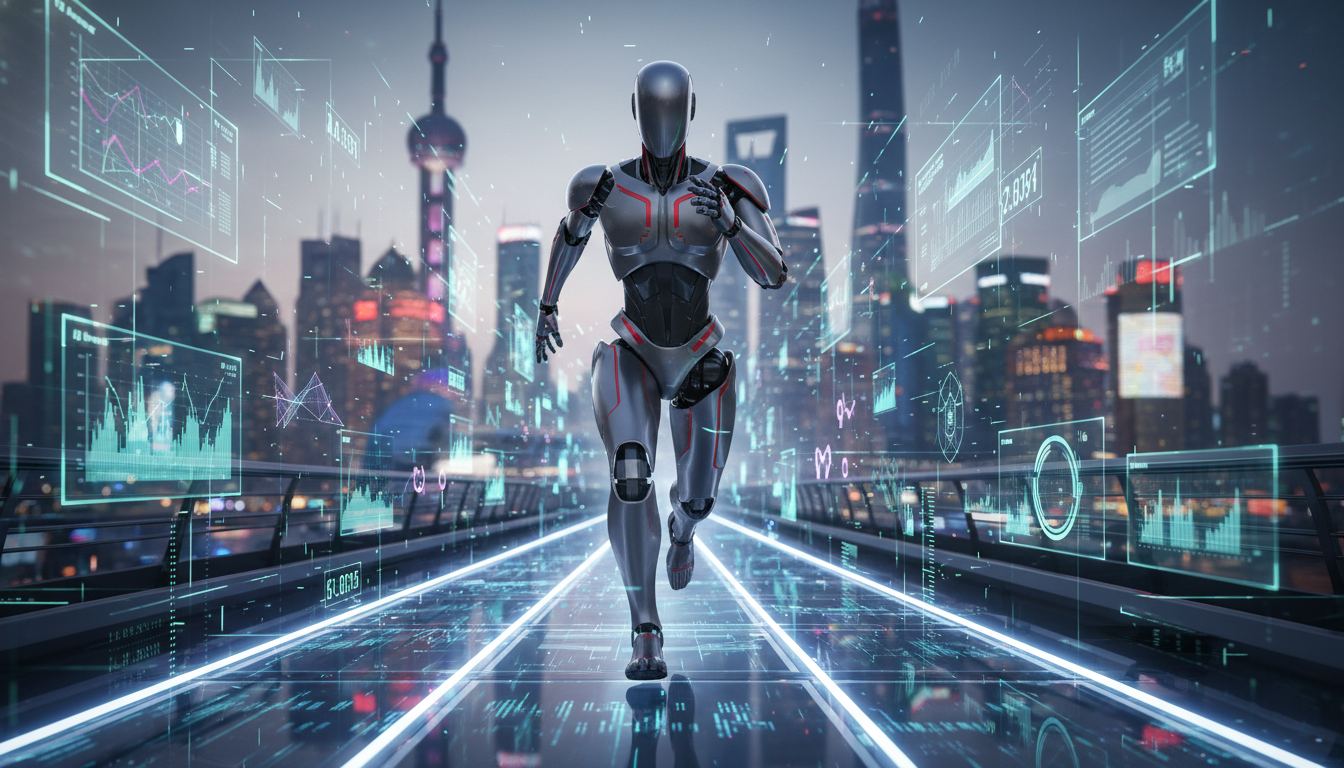
Chinese humanoid robots have once again demonstrated their advanced capabilities by outperforming human competitors in a half-marathon, a feat that reverberates beyond mere sporting achievement. This repeat victory serves as a potent symbol of China's accelerating progress in artificial intelligence and robotics, providing tangible evidence for long-held assertions by industry titans, notably Elon Musk, regarding China's burgeoning technological prowess and its emergence as a formidable global competitor. The significance of this event extends far beyond the finish line.

It underscores China's strategic commitment to dominating next-generation technologies, particularly in areas critical to industrial automation and smart manufacturing. The ability of these robots to sustain complex biomechanical functions over extended periods in a real-world environment highlights sophisticated advancements in AI for perception, navigation, energy management, and robust locomotion algorithms. Such capabilities are direct indicators of a mature research and development ecosystem, capable of translating theoretical breakthroughs into practical, high-performance applications.
From a market structure perspective, this development signals an impending shift in global industrial dynamics. Institutions and traders are closely monitoring these advancements as they foreshadow massive disruptions across various sectors, from logistics and manufacturing to elder care and hazardous environment operations. The efficiency, precision, and endurance showcased by these humanoid platforms suggest a future where automated labor could significantly reduce operational costs and increase productivity, potentially reshaping global supply chains and labor markets.

TradExcel - Professional Trading Journal
TradExcel is a professional trading journal built to help traders log, analyze, and revisit every trade. By tracking performance, strategies, and discipline, TradExcel empowers tra...

Ultrazn - Powerful Cloud Hosting for Your Digital Success
Ultrazn offers a complete digital solution with reliable domain registration, high-performance cloud hosting, secure business email, and scalable infrastructure. Designed for speed...

OctaSend - Professional Email Marketing Platform
OctaSend is a professional email marketing platform that helps businesses create, send, and track powerful campaigns with ease. Featuring smart automation, advanced analytics, and...
Investment flows are expected to intensify towards companies at the forefront of AI, robotics, and automation, especially those with strong ties to the Chinese innovation ecosystem. This latest triumph also lends considerable weight to Elon Musk's previous assessments that China represents Tesla's most significant competitor. While Musk's comments often focused on the automotive sector, where Chinese electric vehicle manufacturers have rapidly scaled, the robot marathon victory broadens the scope of this competitive narrative.
It illustrates a pervasive national strategy geared towards technological supremacy across multiple advanced fields, including general-purpose AI and robotics, which are foundational to future economic power. For market participants, this reinforces the need to factor China's rapid technological ascent into long-term strategic planning and risk assessments. The immediate implications for traders involve reassessing valuations in the global tech landscape, particularly for companies reliant on traditional manufacturing models or those competing directly with emerging Chinese AI and robotics firms.
Institutions may begin to recalibrate their investment portfolios, favoring sectors poised for automation-driven growth and those with exposure to the robust Chinese innovation cycle. The competitive landscape is not merely about market share in existing industries but about leadership in the creation of entirely new ones. Looking forward, this event acts as a powerful signal of the accelerating global technology race.
It suggests a future where the line between human and machine capabilities continues to blur, prompting crucial discussions around intellectual property, ethical AI deployment, and the regulatory frameworks required to govern a world increasingly augmented by advanced robotics. The ongoing successes of Chinese humanoid robots will continue to serve as a bellwether for the broader shifts in global economic power and technological leadership, compelling all market participants to adapt to a rapidly evolving, AI-driven future.
OctaSend - Professional Email Marketing Platform
OctaSend is a professional email marketing platform that helps businesses create, send, and track powerful campaigns with ease. Featuring smart automation, advanced analytics, and...
Ultrazn - Powerful Cloud Hosting for Your Digital Success
Ultrazn offers a complete digital solution with reliable domain registration, high-performance cloud hosting, secure business email, and scalable infrastructure. Designed for speed...
TradExcel - Professional Trading Journal
TradExcel is a professional trading journal built to help traders log, analyze, and revisit every trade. By tracking performance, strategies, and discipline, TradExcel empowers tra...
Comments (0)
Leave a Comment
No comments yet. Be the first to comment!
Related Posts



OctaSend - Professional Email Marketing Platform
OctaSend is a professional email marketing platform that helps businesses create, send, and track powerful campaigns with ease. Featuring smart automation, advanced analytics, and...
Ultrazn - Powerful Cloud Hosting for Your Digital Success
Ultrazn offers a complete digital solution with reliable domain registration, high-performance cloud hosting, secure business email, and scalable infrastructure. Designed for speed...
TradExcel - Professional Trading Journal
TradExcel is a professional trading journal built to help traders log, analyze, and revisit every trade. By tracking performance, strategies, and discipline, TradExcel empowers tra...