


Google Launches Fitbit Air: The Screenless Evolution of Fitness Tracking
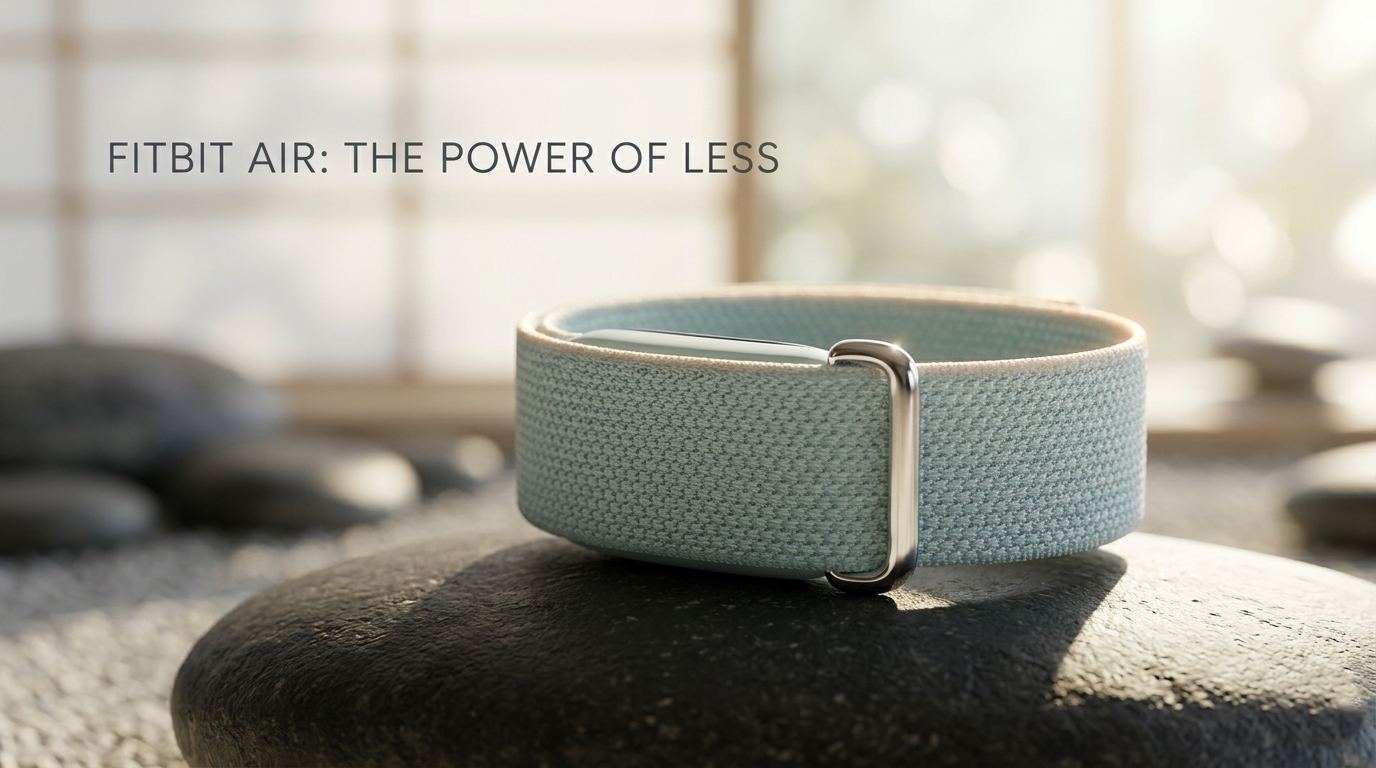
Google has officially unveiled the Fitbit Air, a bold departure from the traditional smartwatch aesthetic that prioritizes distraction-free health monitoring. By removing the display entirely, Google aims to capture a growing segment of users who suffer from screen fatigue but still want deep insights into their physiological data. The Fitbit Air is designed to be "invisible," blending seamlessly into the user’s daily life through a lightweight, pebble-shaped module that can be worn on various high-quality bands or even as a clip-on accessory.
The core philosophy behind the Fitbit Air is "ambient tracking." Without a screen to check every five minutes, users are encouraged to stay present in their surroundings while the device quietly collects high-fidelity data in the background. This minimalist approach allows the internal hardware to focus entirely on sensor accuracy and longevity. The device features an advanced multi-path heart rate sensor, SpO2 monitoring, and a skin temperature sensor, providing a comprehensive view of the user’s cardiovascular health and recovery states.


One of the most significant advantages of the screenless design is the dramatic improvement in battery life. While traditional smartwatches struggle to last more than two days, the Fitbit Air boasts a remarkable 14-day battery cycle on a single charge. This longevity ensures that there are fewer gaps in data collection, particularly during sleep, which is a key focus for this device.

OctaSend - Professional Email Marketing Platform
OctaSend is a professional email marketing platform that helps businesses create, send, and track powerful campaigns with ease. Featuring smart automation, advanced analytics, and...

TradExcel - Professional Trading Journal
TradExcel is a professional trading journal built to help traders log, analyze, and revisit every trade. By tracking performance, strategies, and discipline, TradExcel empowers tra...

Ultrazn - Powerful Cloud Hosting for Your Digital Success
Ultrazn offers a complete digital solution with reliable domain registration, high-performance cloud hosting, secure business email, and scalable infrastructure. Designed for speed...
By tracking sleep stages, restlessness, and breathing rates without the glow of a screen, the Fitbit Air offers one of the most non-intrusive sleep-tracking experiences on the market. Since the device lacks an interface, the Fitbit mobile app serves as the primary hub for all data visualization. Google has integrated its Gemini AI technology into the app to provide personalized health coaching.
Instead of just seeing raw numbers, users receive conversational insights that explain how their activity levels, sleep quality, and stress markers are interconnected. This AI integration helps bridge the gap between data collection and actionable lifestyle changes, making the Fitbit Air a proactive health companion rather than a passive logger. The Fitbit Air also introduces enhanced stress management tools, including an electrodermal activity (EDA) sensor to measure the body’s response to stress.
Without a screen to display notifications, the device uses subtle haptic vibrations to guide users through breathing exercises or mindfulness sessions. This tactile feedback loop is designed to be calming rather than disruptive, reinforcing the device's role as a tool for mental well-being as much as physical fitness. In terms of connectivity, the Fitbit Air utilizes Google’s Fast Pair technology for instantaneous setup with Android devices, though it remains fully compatible with iOS.
The device syncs data encrypted and securely to the Google Health Connect platform, allowing for seamless integration with other third-party health apps. By positioning the Fitbit Air at a competitive price point, Google is clearly targeting both entry-level fitness enthusiasts and "biohackers" who prefer the discreet form factor of a screenless wearable over a bulky smartwatch. Ultimately, the Fitbit Air represents a significant shift in the wearable industry.
It challenges the notion that more features and bigger screens equate to a better product. By focusing on the essentials—comfort, battery life, and data accuracy—Google is betting that the future of fitness tracking is not on our wrists as a mini-computer, but as a quiet, constant observer of our health. It is a device for those who want to live more and look at their wrists less.
OctaSend - Professional Email Marketing Platform
OctaSend is a professional email marketing platform that helps businesses create, send, and track powerful campaigns with ease. Featuring smart automation, advanced analytics, and...
TradExcel - Professional Trading Journal
TradExcel is a professional trading journal built to help traders log, analyze, and revisit every trade. By tracking performance, strategies, and discipline, TradExcel empowers tra...
Ultrazn - Powerful Cloud Hosting for Your Digital Success
Ultrazn offers a complete digital solution with reliable domain registration, high-performance cloud hosting, secure business email, and scalable infrastructure. Designed for speed...
Comments (0)
Leave a Comment
No comments yet. Be the first to comment!
Related Posts



OctaSend - Professional Email Marketing Platform
OctaSend is a professional email marketing platform that helps businesses create, send, and track powerful campaigns with ease. Featuring smart automation, advanced analytics, and...
Ultrazn - Powerful Cloud Hosting for Your Digital Success
Ultrazn offers a complete digital solution with reliable domain registration, high-performance cloud hosting, secure business email, and scalable infrastructure. Designed for speed...
TradExcel - Professional Trading Journal
TradExcel is a professional trading journal built to help traders log, analyze, and revisit every trade. By tracking performance, strategies, and discipline, TradExcel empowers tra...