


Rockstar Games Confronts Major Data Breach, Confidential IP Compromised Via Snowflake Environment
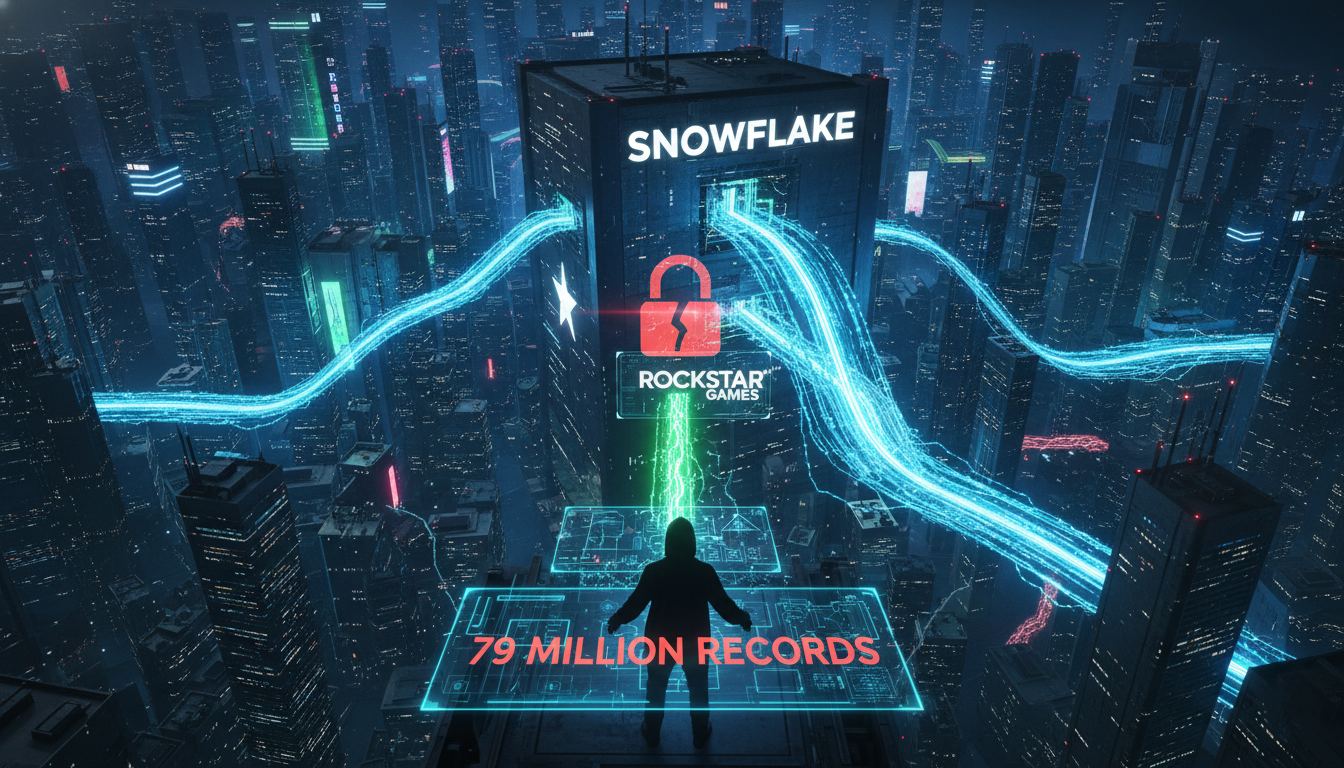
Rockstar Games, a prominent entity within the interactive entertainment sector and the acclaimed developer responsible for the highly anticipated title Grand Theft Auto VI, has reportedly become the target of a significant cyber intrusion. The incident, attributed by self-proclamation to the cybercrime collective known as ShinyHunters, represents a substantial compromise of digital infrastructure. The group asserts it has successfully exfiltrated approximately 79 million records from Rockstar's enterprise data warehousing solution, specifically within their Snowflake environment, raising critical concerns about data integrity and intellectual property protection.
This security incident underscores the escalating sophistication of cyber threats facing high-value digital asset holders. The alleged breach of a cloud-based data platform like Snowflake highlights the complex landscape of shared responsibility in cloud security, where robust internal controls must complement the inherent security features of third-party services. For an organization like Rockstar Games, the implications extend beyond mere data loss; the potential exposure of proprietary game development assets and strategic information could severely impact competitive advantage and future product launches.
The nature of the stolen data, described as nearly 79 million records, suggests a broad compromise that could encompass sensitive corporate data, potentially including unreleased game builds, source code, design documents, and internal communications related to Grand Theft Auto VI. Such information constitutes invaluable intellectual property, the unauthorized release of which could have profound strategic and financial ramifications for the developer and its stakeholders. The integrity of such assets is paramount in an industry driven by innovation and exclusivity.
Reports indicate a recent ultimatum for payment, signaling an imminent threat of public disclosure of the proprietary intellectual property. This development has placed the broader digital entertainment industry on heightened alert regarding the integrity of confidential game data and strategic development assets. The tactic of data exfiltration followed by an extortion demand is a common modus operandi for advanced persistent threat groups, designed to maximize financial gain while inflicting reputational damage.

Ultrazn - Powerful Cloud Hosting for Your Digital Success
Ultrazn offers a complete digital solution with reliable domain registration, high-performance cloud hosting, secure business email, and scalable infrastructure. Designed for speed...

TradExcel - Professional Trading Journal
TradExcel is a professional trading journal built to help traders log, analyze, and revisit every trade. By tracking performance, strategies, and discipline, TradExcel empowers tra...

OctaSend - Professional Email Marketing Platform
OctaSend is a professional email marketing platform that helps businesses create, send, and track powerful campaigns with ease. Featuring smart automation, advanced analytics, and...
From a market structure perspective, such high-profile breaches compel a re-evaluation of cybersecurity postures across the entire digital content ecosystem. Companies are increasingly expected to demonstrate rigorous data governance and robust defense mechanisms, not only to protect their own assets but also to maintain consumer trust and comply with evolving data protection regulations. The incident serves as a stark reminder of the continuous, proactive investment required in cybersecurity infrastructure, threat intelligence, and incident response capabilities.
This event signals a critical juncture for organizations leveraging cloud solutions for sensitive data storage. It reinforces the imperative for comprehensive security audits, stringent access controls, and continuous monitoring within cloud environments. The potential for confidential game data to be leaked could set precedents for how intellectual property is protected and valued in the digital age, prompting deeper scrutiny from investors, partners, and regulatory bodies concerning corporate resilience against cyber warfare.
Ultrazn - Powerful Cloud Hosting for Your Digital Success
Ultrazn offers a complete digital solution with reliable domain registration, high-performance cloud hosting, secure business email, and scalable infrastructure. Designed for speed...
TradExcel - Professional Trading Journal
TradExcel is a professional trading journal built to help traders log, analyze, and revisit every trade. By tracking performance, strategies, and discipline, TradExcel empowers tra...
OctaSend - Professional Email Marketing Platform
OctaSend is a professional email marketing platform that helps businesses create, send, and track powerful campaigns with ease. Featuring smart automation, advanced analytics, and...
Comments (0)
Leave a Comment
No comments yet. Be the first to comment!
Related Posts



OctaSend - Professional Email Marketing Platform
OctaSend is a professional email marketing platform that helps businesses create, send, and track powerful campaigns with ease. Featuring smart automation, advanced analytics, and...
Ultrazn - Powerful Cloud Hosting for Your Digital Success
Ultrazn offers a complete digital solution with reliable domain registration, high-performance cloud hosting, secure business email, and scalable infrastructure. Designed for speed...
TradExcel - Professional Trading Journal
TradExcel is a professional trading journal built to help traders log, analyze, and revisit every trade. By tracking performance, strategies, and discipline, TradExcel empowers tra...