


Samsung's Groundbreaking Wearable Study Aims to Predict Fainting
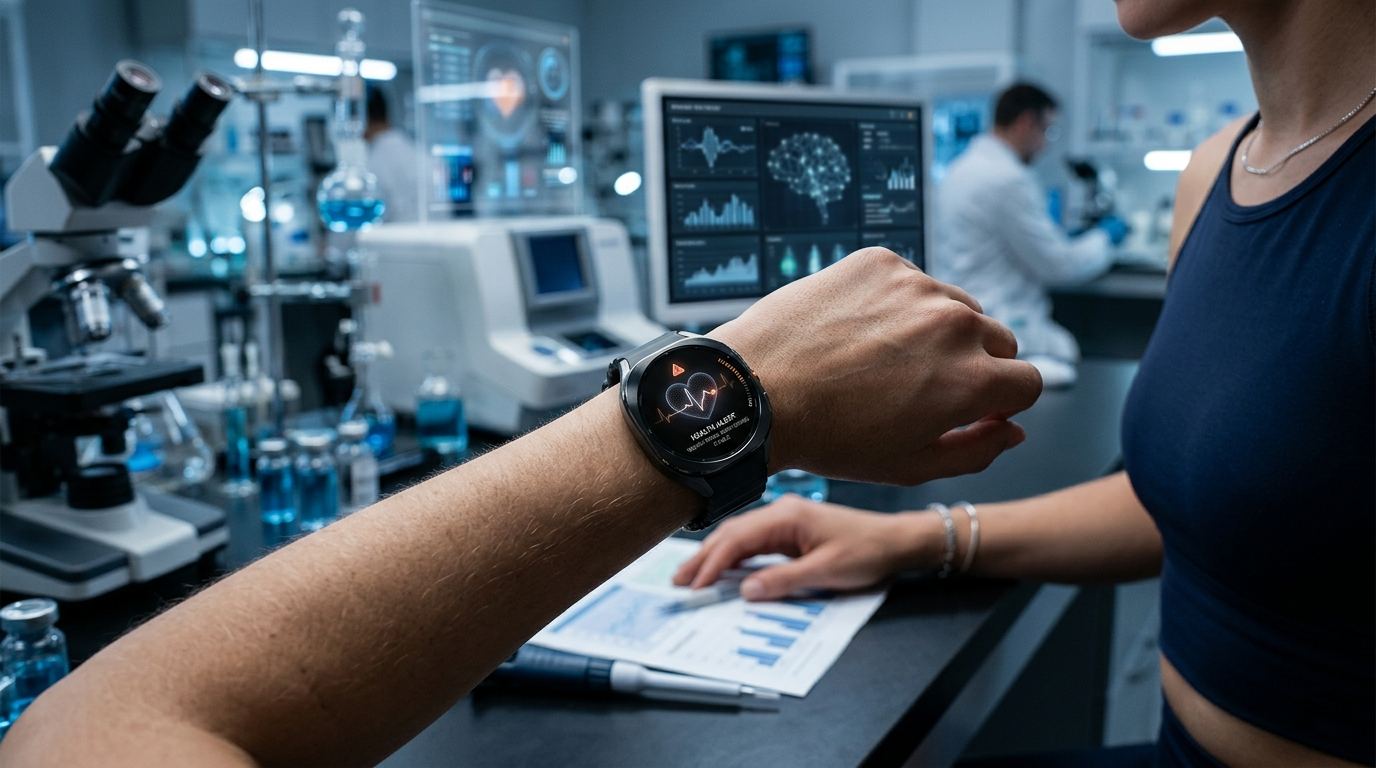
Samsung has announced a significant leap in health technology with a pioneering study focused on predicting fainting episodes, medically known as syncope. Leveraging its advanced wearable devices, the tech giant is venturing into an area that could revolutionize preventive healthcare and offer crucial insights into an often-misunderstood condition. This ambitious research initiative aims to identify subtle physiological changes that precede a fainting spell, potentially providing users with an early warning system.
Fainting, while often benign, can sometimes indicate underlying serious health issues, ranging from cardiovascular problems to neurological disorders. For individuals prone to syncope, the unpredictable nature of these episodes can lead to anxiety, injuries from falls, and a diminished quality of life. Current diagnostic methods often rely on retrospective analysis or costly, inconvenient monitoring.
Samsung's approach seeks to shift this paradigm by offering continuous, non-invasive monitoring through devices like smartwatches, collecting a wealth of real-time biometric data. The core of Samsung's study involves the sophisticated array of sensors embedded in its latest generation of wearables. These devices can track various vital signs including heart rate, heart rate variability, sleep patterns, activity levels, and potentially even subtle changes in blood pressure or skin conductance.


OctaSend - Professional Email Marketing Platform
OctaSend is a professional email marketing platform that helps businesses create, send, and track powerful campaigns with ease. Featuring smart automation, advanced analytics, and...

Ultrazn - Powerful Cloud Hosting for Your Digital Success
Ultrazn offers a complete digital solution with reliable domain registration, high-performance cloud hosting, secure business email, and scalable infrastructure. Designed for speed...

TradExcel - Professional Trading Journal
TradExcel is a professional trading journal built to help traders log, analyze, and revisit every trade. By tracking performance, strategies, and discipline, TradExcel empowers tra...
The sheer volume and granularity of this data, collected passively throughout a user's day, create an unprecedented opportunity for detailed physiological analysis that was previously confined to clinical settings. Crucially, the breakthrough lies in the application of advanced artificial intelligence and machine learning algorithms. Researchers are training these AI models to recognize complex patterns and anomalies within the collected data that correlate with impending syncope.
By identifying these pre-fainting signatures, the system could learn to differentiate between normal physiological fluctuations and those indicative of an imminent episode, offering a predictive capability that has long eluded medical science. While still in the research phase, the implications of such a predictive system are profound. Imagine a wearable device that could alert you minutes or even seconds before you might faint, allowing you to find a safe place to sit or lie down, thus preventing injury.
This technology could empower individuals to better manage their health, provide valuable data for their healthcare providers, and potentially lead to earlier diagnosis of underlying conditions. Samsung's commitment to this area underscores a broader industry trend towards proactive and personalized health management. Beyond merely tracking fitness, smart devices are evolving into sophisticated health companions capable of offering actionable insights.
This study, conducted in collaboration with medical experts, represents a significant step towards integrating cutting-edge technology with critical health monitoring, pushing the boundaries of what consumer electronics can achieve in the realm of well-being. The success of this research could pave the way for future integrations into Samsung's health ecosystem, making predictive fainting alerts a standard feature. It highlights the potential for technology to not only improve quality of life but also to save lives by offering timely warnings and facilitating earlier medical intervention.
Samsung's pioneering efforts in this field are setting a new standard for wearable health innovation.
TradExcel - Professional Trading Journal
TradExcel is a professional trading journal built to help traders log, analyze, and revisit every trade. By tracking performance, strategies, and discipline, TradExcel empowers tra...
OctaSend - Professional Email Marketing Platform
OctaSend is a professional email marketing platform that helps businesses create, send, and track powerful campaigns with ease. Featuring smart automation, advanced analytics, and...
Ultrazn - Powerful Cloud Hosting for Your Digital Success
Ultrazn offers a complete digital solution with reliable domain registration, high-performance cloud hosting, secure business email, and scalable infrastructure. Designed for speed...
Comments (0)
Leave a Comment
No comments yet. Be the first to comment!
Related Posts



TradExcel - Professional Trading Journal
TradExcel is a professional trading journal built to help traders log, analyze, and revisit every trade. By tracking performance, strategies, and discipline, TradExcel empowers tra...
OctaSend - Professional Email Marketing Platform
OctaSend is a professional email marketing platform that helps businesses create, send, and track powerful campaigns with ease. Featuring smart automation, advanced analytics, and...
Ultrazn - Powerful Cloud Hosting for Your Digital Success
Ultrazn offers a complete digital solution with reliable domain registration, high-performance cloud hosting, secure business email, and scalable infrastructure. Designed for speed...